Nature-Related Developments
Worldwide and in Japan
The World Economic Forum reports that more than half of the global GDP, approximately US$44 trillion, depends on nature. As the decline of nature and the collapse of ecosystems present serious risks to businesses, international movements have been growing toward becoming “nature positive,” which signifies to halt and reverse biodiversity loss to put nature on a path to recovery trajectory. This section introduces the Kunming-Montreal Global Biodiversity Framework (GBF), a global target for biodiversity; and the TNFD, a framework for corporate reporting on nature-related issues.
GBF
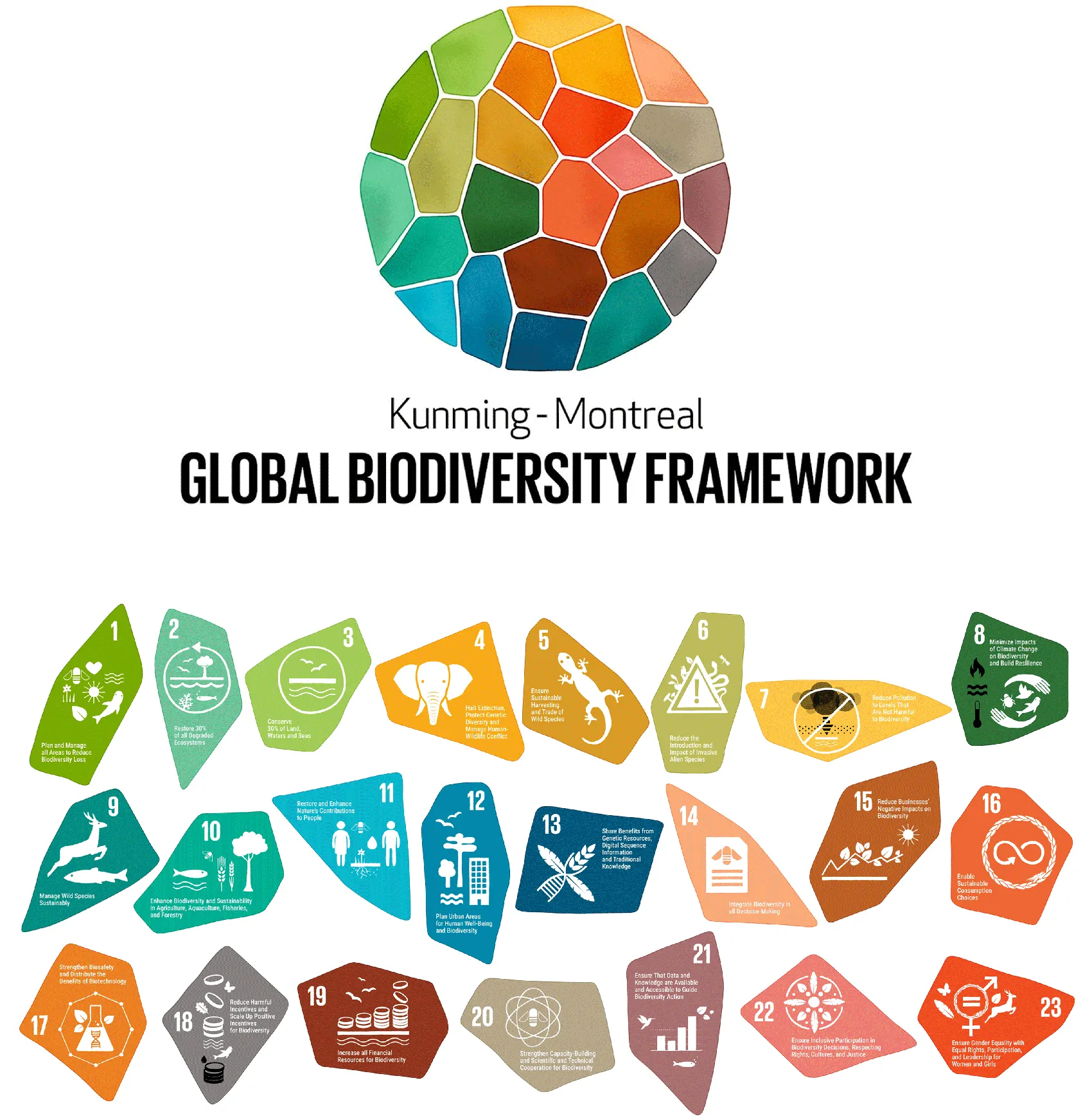
The Kunming-Montreal Global Biodiversity Framework (GBF) is a collection of new worldwide biodiversity objectives adopted at the fifteenth Conference of the Parties to the Convention on Biological Diversity (CBD-COP15), held in Montreal, Canada, in December 2022. The GBF presents a vision for 2050, four goals to be achieved by 2050, and a mission to be accomplished by 2030. It also establishes 23 actions to be implemented to fulfill the 2030 mission. The 2050 Vision, 2050 Goals, 2030 Mission, and 23 Action Agenda are outlined below.
- 2050 Vision
-
“A World Living in Harmony with Nature”
(Carried over from the Aichi Biodiversity Targets, which are the global biodiversity goals established for 2020) - 2050 Goals
-
These goals serve to make the 2050 Vision more specific. They are framed around the four themes of conservation, sustainable use, benefit-sharing, and securing the means and methods for implementation, and they describe the world we aim to build through collective efforts.
- <Overview of the Four Goals>
-
- Protect and Restore
- Prosper with Nature
- Share Benefits Fairly
- Invest and Collaborate
- 2030 Mission
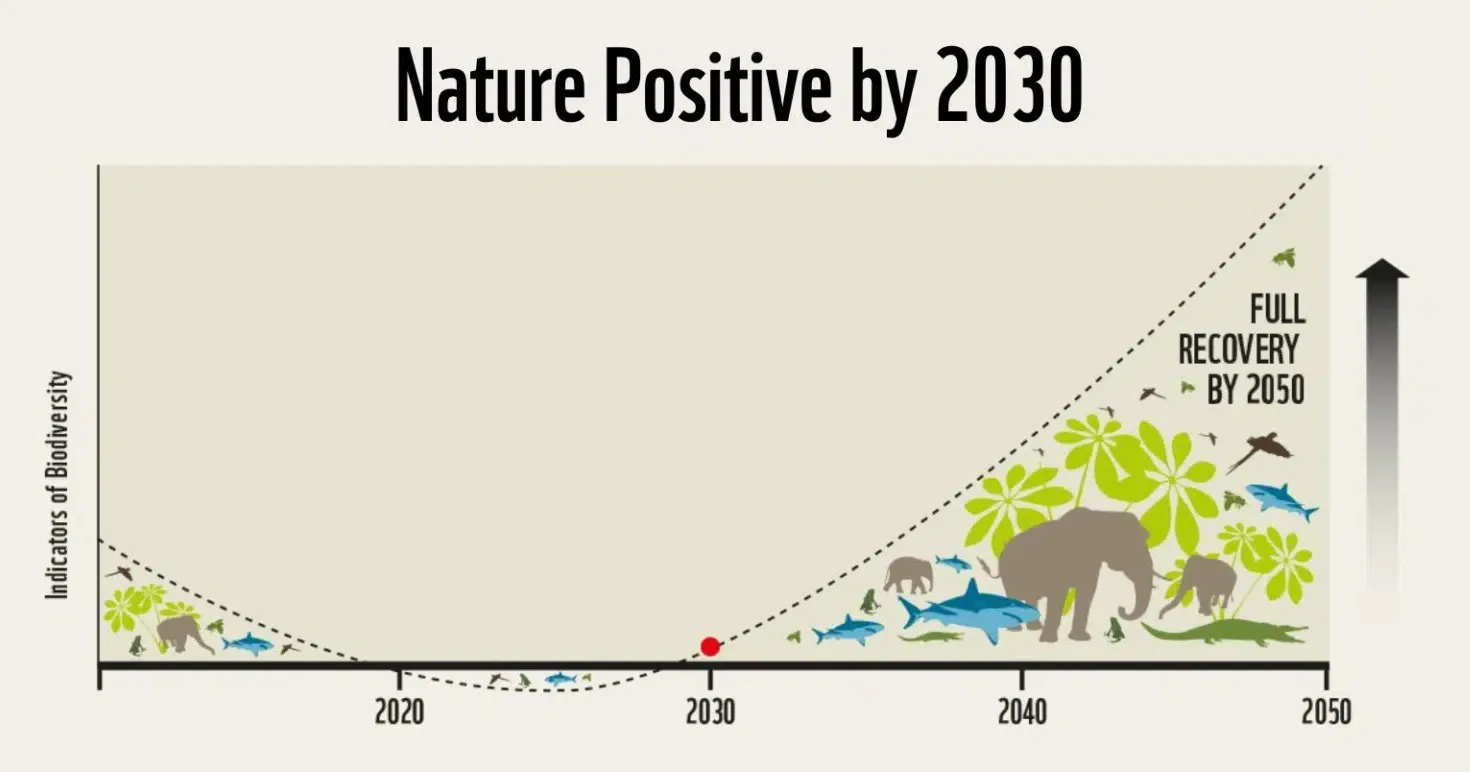
- “To take urgent action to halt and reverse biodiversity loss to put nature on a path to recovery for the benefit of people and planet by conserving and sustainably using biodiversity and by ensuring the fair and equitable sharing of benefits from the use of genetic resources, while providing the necessary means of implementation.” Thus, reverse biodiversity loss by 2030 and achieve full recovery by 2050, relative to 2020 levels. In other words, “Nature Positive” by 2030.
- 2030 Target
-
This is the Action Agenda for 2030 designed to support the goal of “nature positive.”
- <Overview of Key Targets>
-
-
Target 3:
Conserve 30% of Land, Waters and Seas (30 by 30 Target) -
Target 6:
Reduce the Introduction and Establishment of Invasive Alien Species by 50% -
Target 8:
Minimize the Impacts of Climate Change on Biodiversity and Build Resilience Through Nature-Based Solution -
Target 15:
Promote Business Assessment and Disclosure of Dependencies / Impacts and Risks / Opportunities on Biodiversity
-
Target 3:
Among them, the central idea present throughout these targets is the “nature positive” concept. Historically, society and the economy have aimed primarily to minimize harm to nature. However, this alone cannot create a society that lives in harmony with nature. The nature positive concept calls for reversing the decline of nature so that natural abundance exceeds the 2020 levels. This mission has been embedded into global targets. Therefore, governments, companies, and organizations worldwide are intensifying their actions to achieve nature positive. In Japan, the Cabinet approved the National Biodiversity Strategy in 2023, and it outlines the direction of medium- and long-term policies and initiatives through 2030.
TNFD
The Taskforce on Nature-related Financial Disclosures (TNFD) was established in 2021 as a global taskforce to create a corporate framework for managing and disclosing nature-related risks, reflecting the increased awareness of the dangers of nature degradation and the importance of restoration. TNFD seeks to create and provide a framework for organizations to report on and act upon evolving nature-related risks, helping shift global financial flows away from negative impacts and toward positive impacts for nature. Many companies in Japan are already adopting this framework to evaluate their business dependencies and impacts on natural capital and disclose the resulting risks and opportunities.

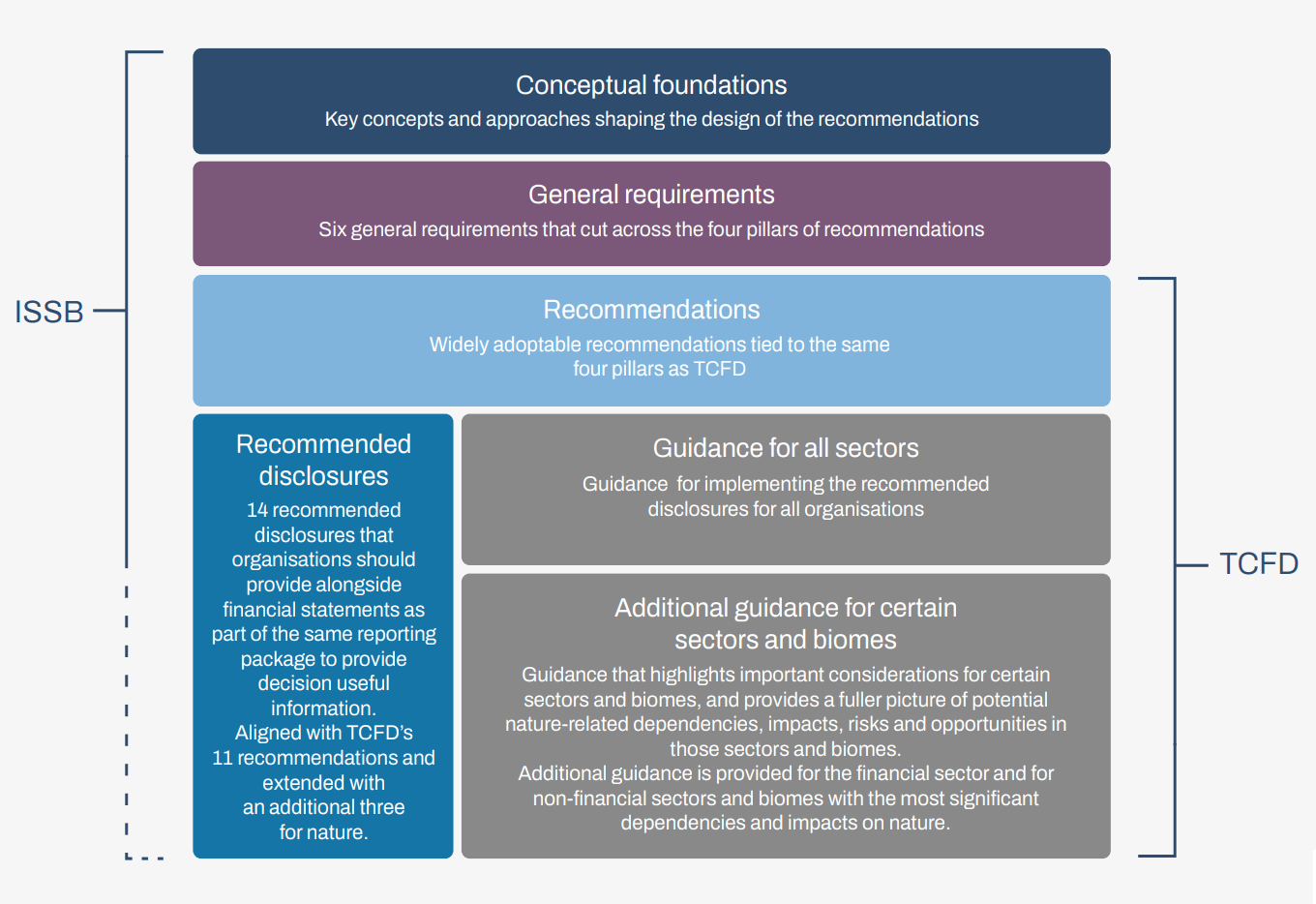
In September 2023, the TNFD issued the official version of its framework, the Recommendations of the TNFD, to guide companies in identifying, managing, and disclosing nature-related risks and opportunities, as well as the dependencies and impacts underlying them. The TNFD disclosure framework comprises three components: basic concepts for nature-related disclosure, general requirements, and disclosure recommendations.
① Basic Concepts
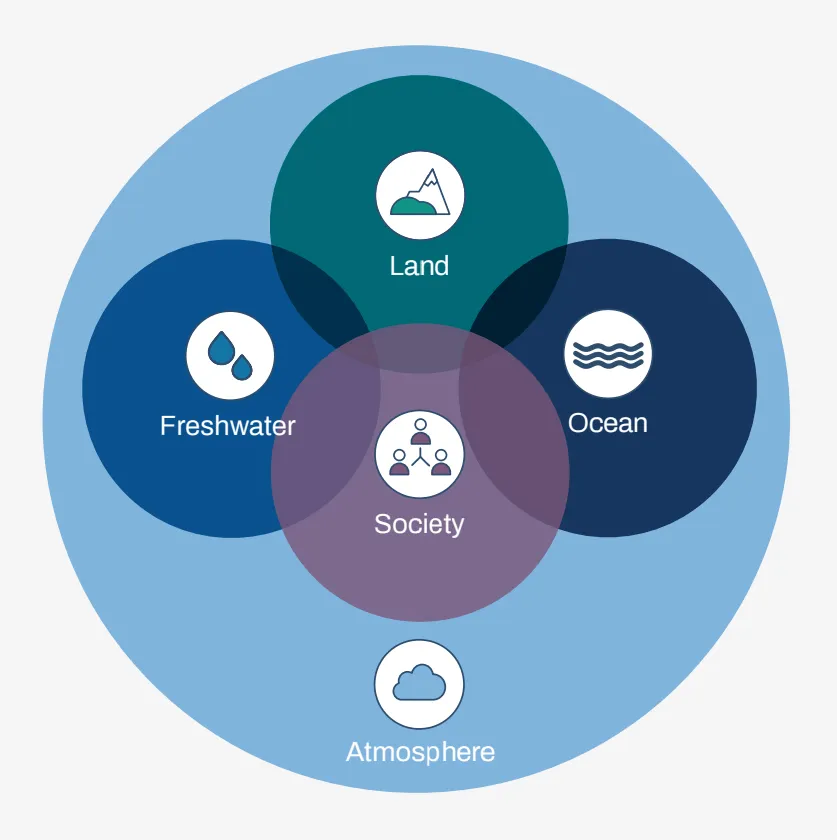
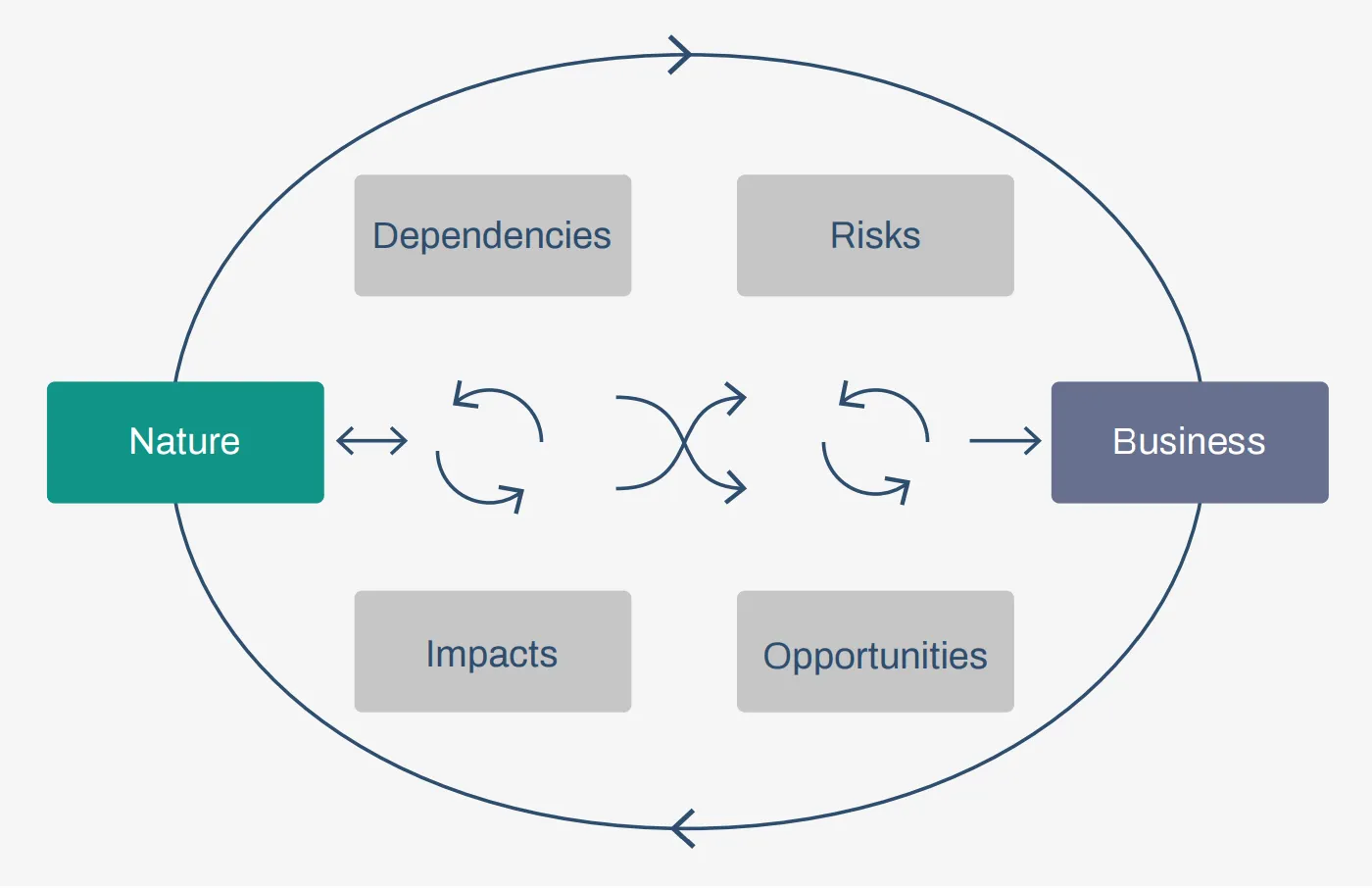
To build an understanding of the relationship between nature and business, the TNFD defines nature, previously considered an abstract concept, as comprising the four domains of land, ocean, freshwater, and the atmosphere. Human society, including people themselves, is situated within all four realms. TNFD’s core idea is that each domain of nature and human society interact and that businesses and society depend on and affect nature in several ways. TNFD further notes that nature-related risks and opportunities originate from the dependence on ecosystem services and impacts on nature. These nature-related dependencies, impacts, risks, and opportunities are collectively termed nature-related issues.
② General Requirements
The general requirements include six elements: application of materiality; scope of disclosures; location of nature-related issues; integration with other sustainability-related disclosures; time horizons considered; and the engagement of indigenous peoples, local communities, and affected stakeholders in the identification and assessment of the organization’s nature-related issues. Their purpose is to maintain consistency in disclosure and align understanding between companies (as disclosers) and investors (as readers).
③ Disclosure Recommendations
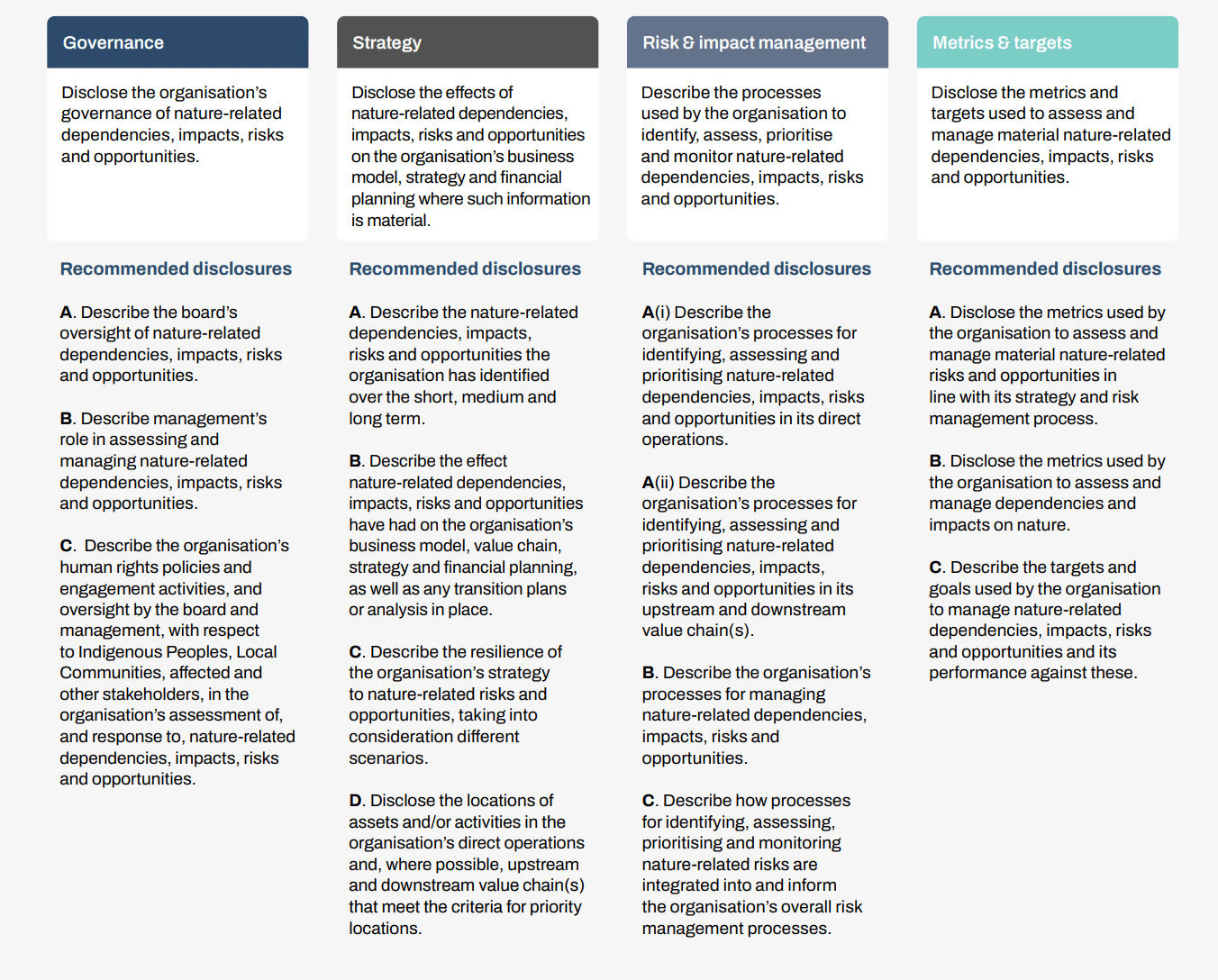
The disclosure recommendations form the core of the TNFD framework. They are grouped into two parts: the core recommendations, which contain four pillars with fourteen detailed disclosure items modeled on the Task Force on Climate-Related Financial Disclosures (TCFD); and additional guidance, which organizations may adopt voluntarily.
The TNFD’s four pillars are governance, strategy, risk and impact management, and metrics and targets. Each pillar has three to four disclosure items. Disclosure following these recommendations ensures alignment with other sustainability reporting standards, such as those provided by the TCFD, the International Sustainability Standards Board (ISSB), and the Corporate Sustainability Reporting Directive (CSRD).
Additional guidance includes “Getting started with adoption of the TNFD Recommendations” to support organizations beginning nature-related disclosure; “Guidance on the identification and assessment of nature-related issues: the LEAP approach,” which outlines an integrated method for examining nature-related issues, such as an organization's links to nature, its dependencies, and impacts, and associated risks and opportunities; and additional guidance by sector for industries closely connected to nature.
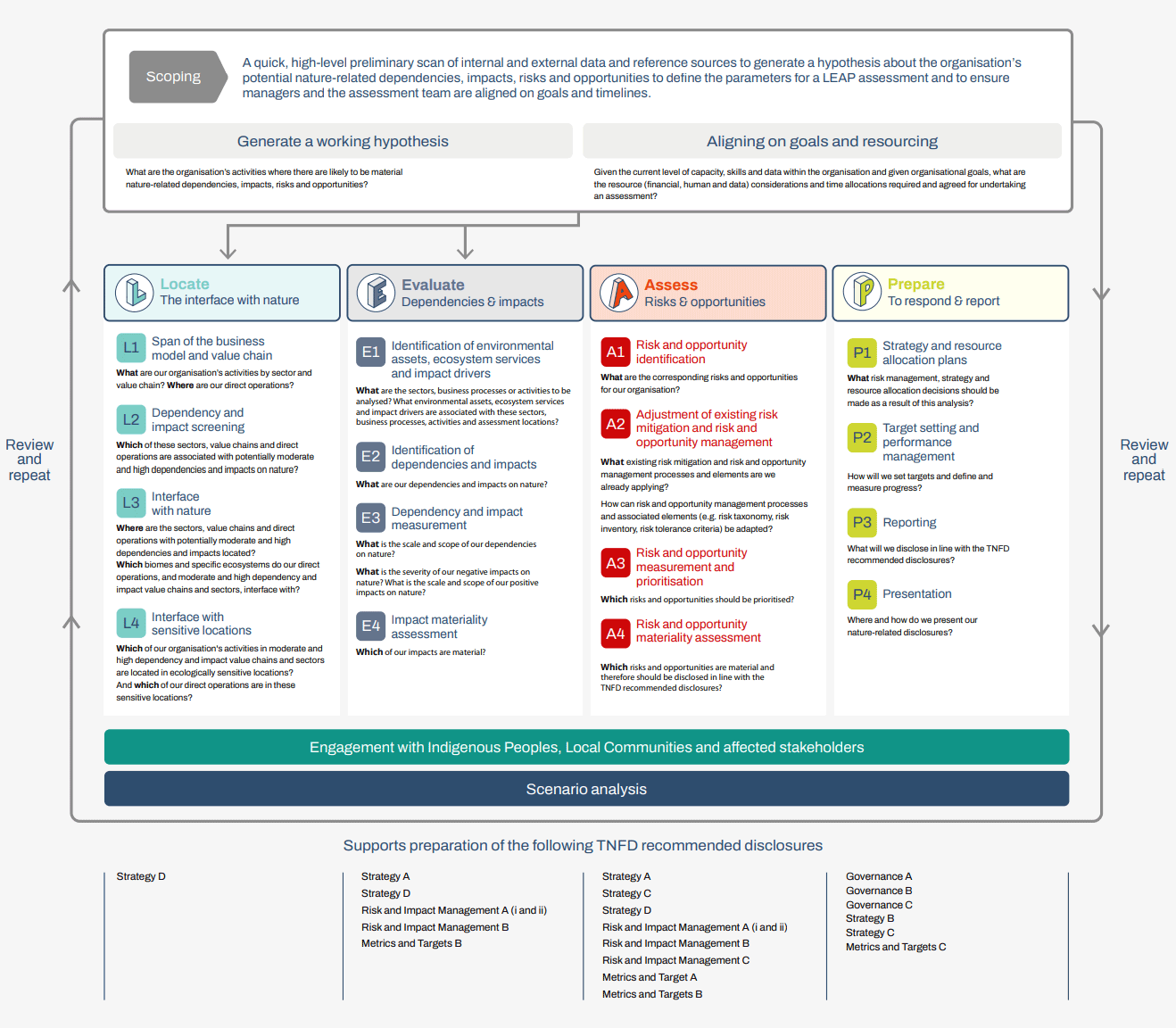
- <Overview of the LEAP Approach>
-
The LEAP approach, short for “Locate, Evaluate, Assess, and Prepare,” serves as a framework for incorporating the evaluation of nature-related dependencies and impacts, along with the associated risks and opportunities. Although use of the approach is voluntary, it allows for thorough assessment and planning when reporting on nature-related issues. A summary of each LEAP step is presented below.
-
1.
Locate: Identify connections with nature
“Locate” refers to the phase in which the business examines which parts of their operations and value chains may be significant for nature-related issues and pinpoints sensitive locations. Within the TNFD context, sensitive locations indicate the ecologically sensitive locations connected to an organization's direct operations, as well as to upstream and downstream value chain assets and activities. The ecosystems (biomes) that interact with the business’s operations and value chain are also identified. -
2.
Evaluate: Examine dependencies and impacts
“Evaluate” refers to the phase in which the business determines, analyzes, and quantifies the extent to which the business operations rely on nature and the impacts they generate. In this step, the business reviews the magnitude and scale of its dependencies and impacts and determines which of them are material.
It is essential to organize material dependencies and impacts by location, linking them to contextual and geographic information, including findings from the “Locate” stage’s review of sensitive locations. -
3.
Assess: Analyze risks and opportunities
“Assess” refers to the phase in which the business determines and ranks risks and opportunities based on identified dependencies and impacts. Each risk and opportunity is reviewed for significance and priority by considering factors such as time horizon, intensity of impact, and likelihood of occurrence.
It is helpful to examine nature-related risks and opportunities by drawing upon the sensitive locations identified in the “Locate” findings, the dependencies and impacts identified during the “Evaluate” phase, and information regarding relevant external conditions. -
4.
Prepare: Plan responses and reporting
“Prepare” refers to the phase in which the business considers which response strategies and targets should be set and which items should be disclosed. This phase involves preparing strategic responses and disclosures, including measures to prevent or reduce risks and strategies to pursue opportunities.
When developing initiatives, businesses should align with the mitigation hierarchy framework of Science Based Targets for Nature (SBTs for Nature), known as AR3T, prioritizing actions that prevent negative impacts on nature.
-
1.
Locate: Identify connections with nature
GBF Target 15 and Japan’s National Biodiversity Strategy also specify goals for corporate disclosure, and, like climate-related matters, demand for nature-related disclosure is increasing.