
Material Transport Associated with
Social and Economic Activities
Human society and the economy form a hierarchical structure upheld by the biosphere, with materials circulating between each tier. Carbon is the most representative example. Carbon is taken from the earth as fossil fuels, moves through global circulation pathways, and eventually returns to the atmosphere and oceans. This section outlines the circulation route and considers how social and economic activities connect with material transport.
Human-driven carbon movement starts when fossil fuels, such as oil, coal, and natural gas, are extracted from the earth. Since the Industrial Revolution, humanity has continued to depend on fossil fuels and by 2025, global oil supply is projected to reach approximately 100 million barrels per day, shipped worldwide through marine tankers and pipelines. Burning fossil fuels is expected to release roughly 37 billion tons of carbon dioxide per year by 2024, intensifying global warming.
The ships and terrestrial transportation systems that transport these fuels also consume fossil fuels. Worldwide shipping produces about 2.5% of all human-generated greenhouse gas emissions, and air transport contributes a similar share of approximately 2.5%. In 2022, transportation overall, including road and rail, emitted around 8 billion tons of carbon dioxide.
Human social activity generates carbon through fossil fuel use and transports carbon through products. Products such as steel, plastics, timber, and agricultural goods contain carbon in solid form, and logistics systems move this carbon in ways that differ from the natural carbon cycle.
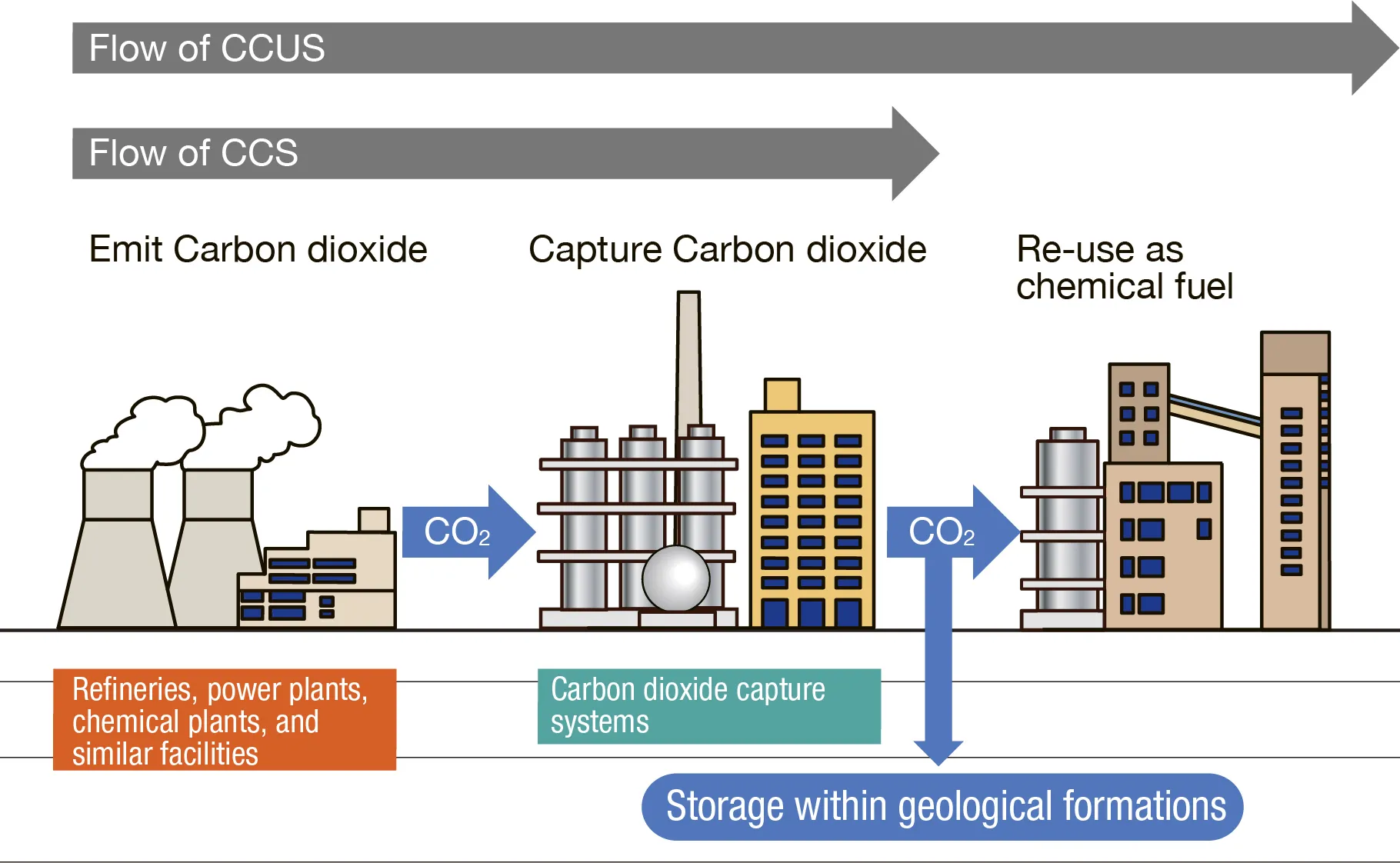
Carbon dioxide capture and storage (CCS) and carbon dioxide capture, utilization, and storage (CCUS) are technologies designed to reintegrate one-way carbon emissions from fossil fuel use back into the carbon cycle. CCS stores captured carbon dioxide underground, whereas CCUS includes the storage and reuse of carbon dioxide in fuels, plastics, and other materials. In North America, a pipeline network exceeding 8,000 km is operating to transport carbon dioxide captured at power and chemical plants deep underground, storing and injecting tens of millions of tons annually. Demonstration projects are also being conducted to ship liquefied carbon dioxide in dedicated vessels, and an infrastructure capable of large-scale, long-distance carbon dioxide transport to support CCUS is being developed.
- Source:
